Morphologically conservative taxa
Devonian, Carboniferous, Permian, Triassic, Jurassic, Cretaceous
Global distribution (USA, China, Germany, UK, etc.)
Multiple localities worldwide
Coloration Data
The scales of numerous fossil fishes retain discernible in-life pigmentation patterns. Mesozoic insects — such as giant lacewings of the family Kalligrammatidae — frequently preserve conspicuous wing spots, bands, and eyespots, while ancient wasps, flies, and beetles exhibit structural iridescence. Lacewings of the genus Lichenipolystoechotes bore intricate branching wing patterns specialized for lichen mimesis. In fossil crinoids, organic aromatic pigments identical to those found in living species have been isolated, demonstrating that prehistoric forms exhibited vibrant, diverse coloration comparable to their modern counterparts. Furthermore, original color banding, zigzags, and spots have been widely reconstructed across numerous fossil mollusks and brachiopods.
Scanning electron microscopy (SEM), geochemical analysis of pigment biomarkers, and visual examination of preserved pigment impressions.
Publications
-
David R. Kobluk & Royal H. Mapes (1989)
A review article on the coloration of Paleozoic marine invertebrates. -
Jakob Vinther (2015)
An overview of methods for reconstructing paleo‑coloration. -
Christina E. O’Malley; William I. Ausich; Yu-Ping Chin (2013)
A chemical study of Carboniferous crinoids, proving that they retain organic pigments. -
Qiang Yang, Yongjie Wang, Conrad C. Labandeira, Chungkun Shih & Dong Ren (2014)
A study of the coloration of Mesozoic lacewing insects of the family Kalligrammatidae. -
Michael D. Gottfried (1989)
Description of fossil evidence of external protective pigmentation in a Permian ray‑finned fish. -
Chenyang Cai; Erik Tihelka; Yanhong Pan; Ziwei Yin; Rixin Jiang; Fangyuan Xia; Diying Huang (2020)
A study of insects with structural coloration from Cretaceous Burmese amber. -
Hui Fang, Conrad C. Labandeira, Yiming Ma, Bingyu Zheng, Dong Ren, Xinli Wei, Jiaxi Liu, Yongjie Wang (2020)
Description of a new genus, Lichenipolystoechotes, of Jurassic lacewings from China, the pattern on the wings of which mimics the appearance of the contemporary lichen Daohugouthallus ciliiferus.
Documents and files
-
Vinther_2015.pdf (PDF)
Review article on fossil color reconstruction. -
Yang_et_al_2014.pdf (PDF)
Study of the coloration of Mesozoic lacewings. -
Cai_et_al_2020.pdf (PDF)
Study of structural colors in Mesozoic insects. -
Fang_et_al_2020.pdf (PDF)
Article on the Jurassic lacewing Lichenipolystoechotes mimicking lichens.
Reconstructions
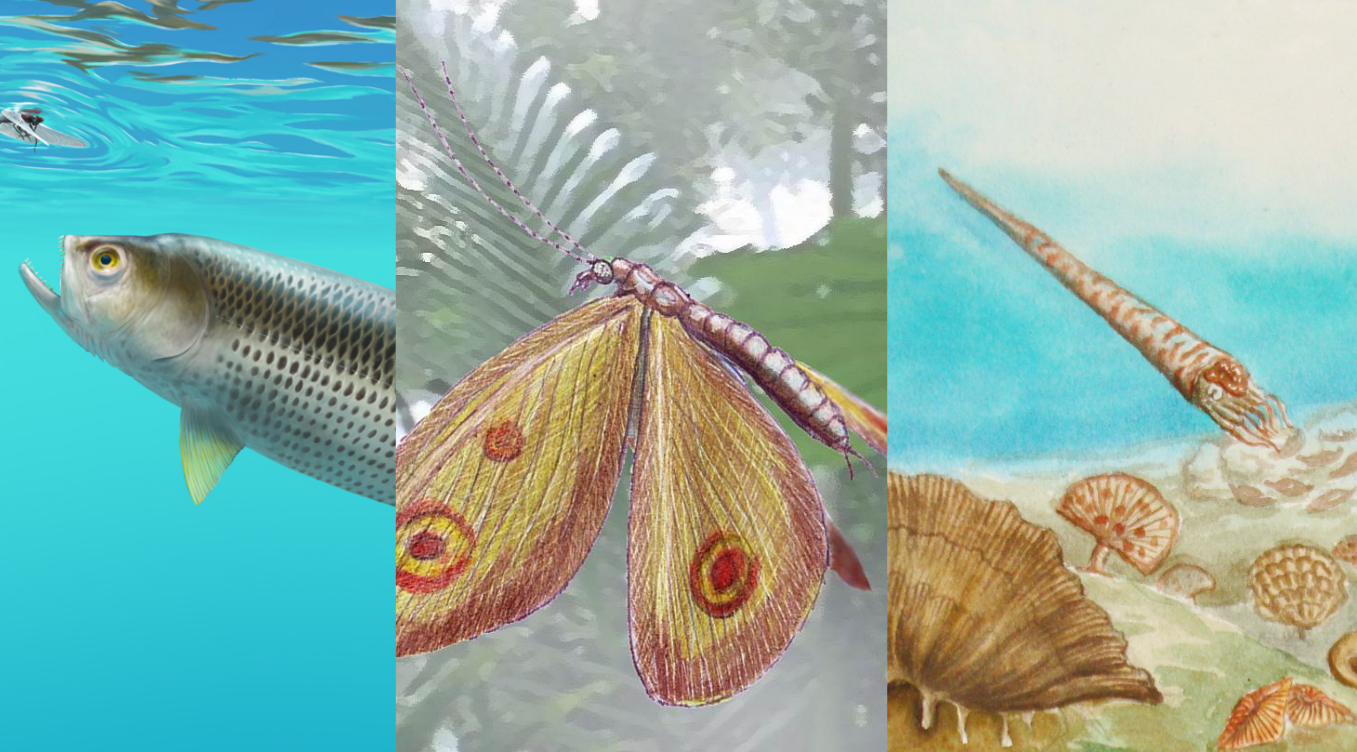
Fossils
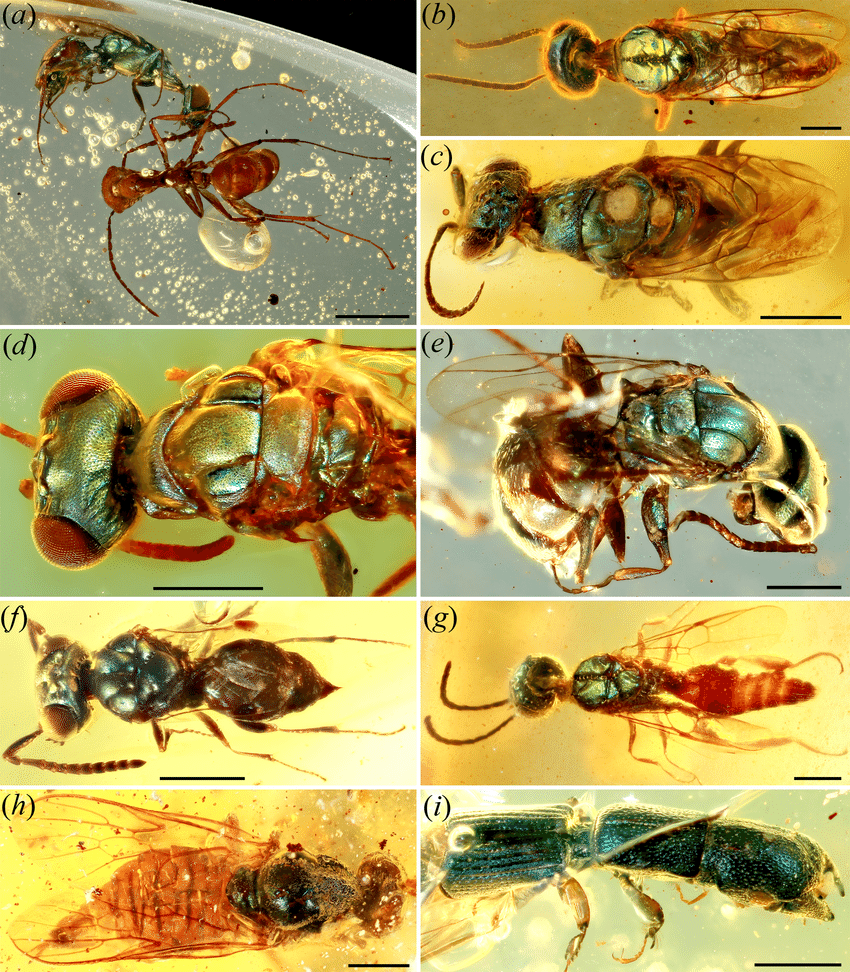 Beetles, flies, and wasps in Cretaceous amber.
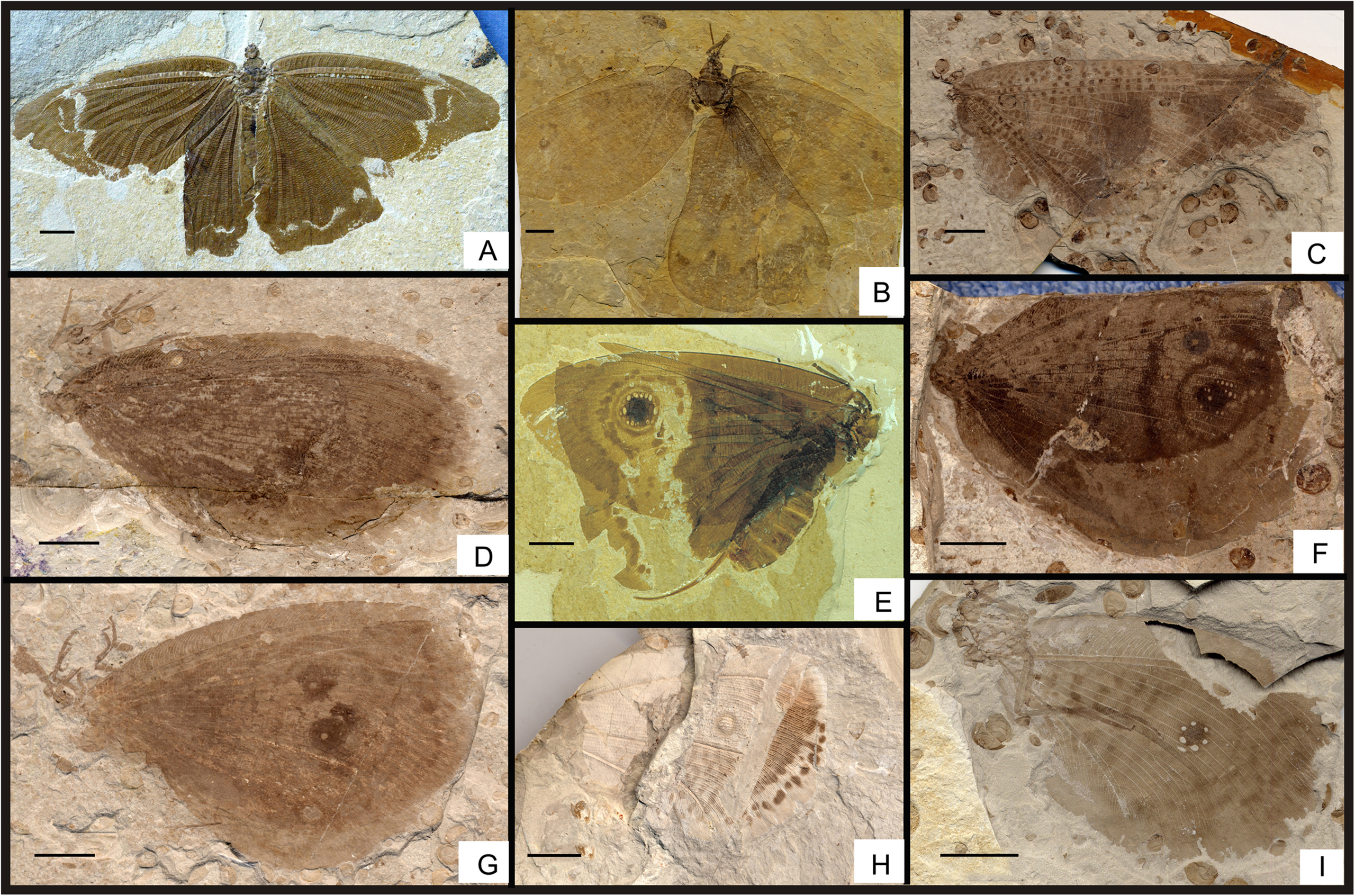 Fossil lacewings of the family Kalligrammatidae.
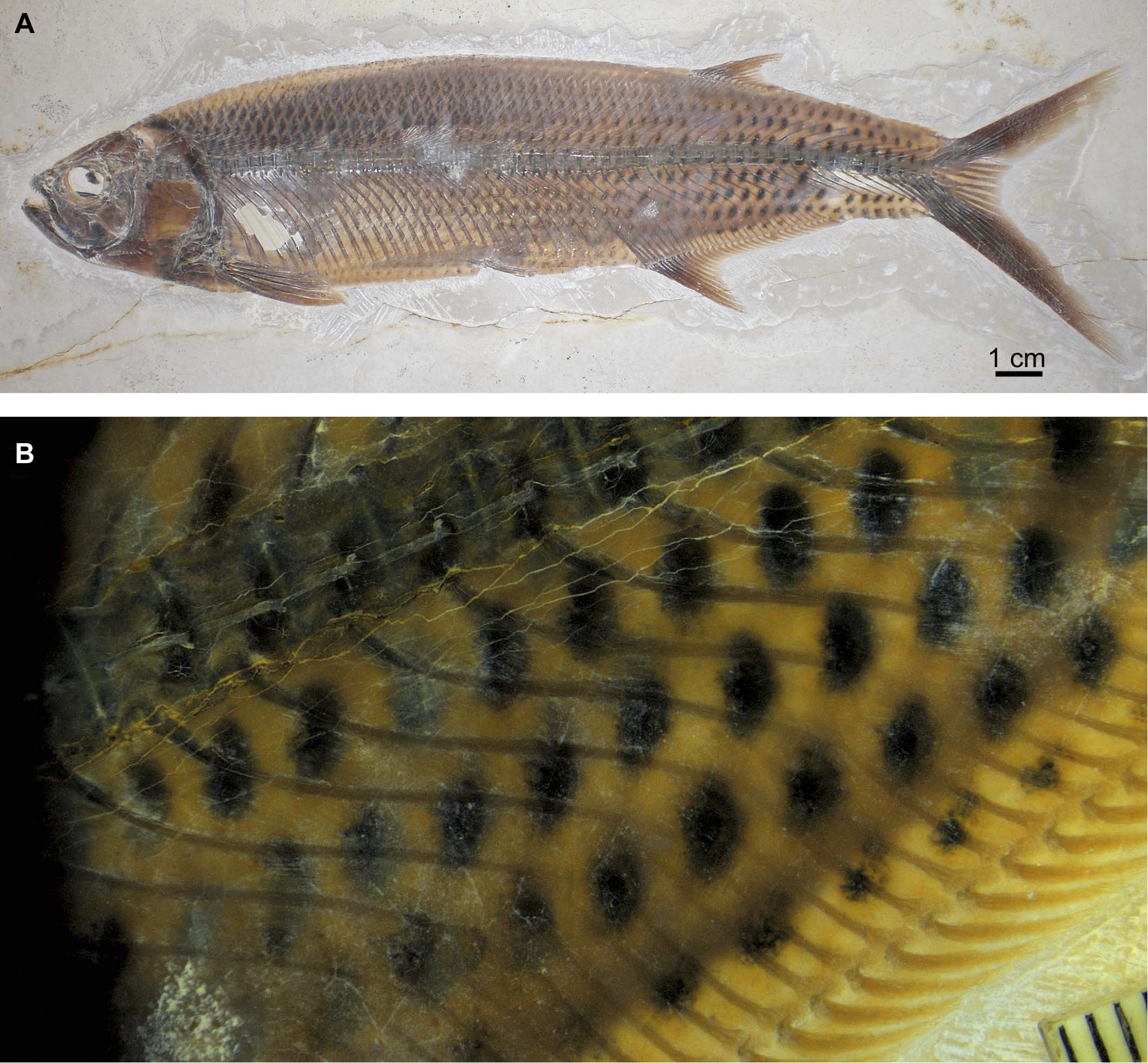 Late Jurassic fish Thrissops with traces of life coloration on its scales.
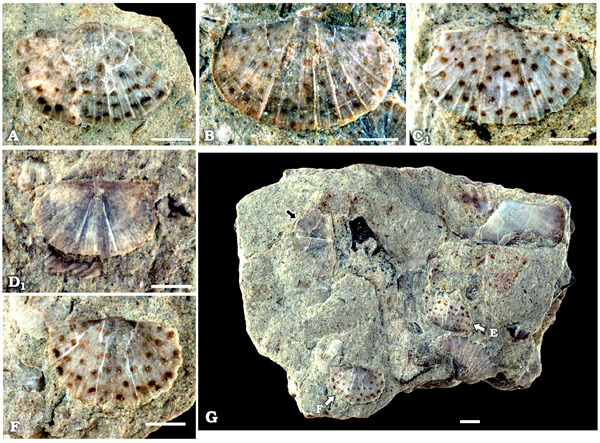 Fossil brachiopods with traces of life coloration.
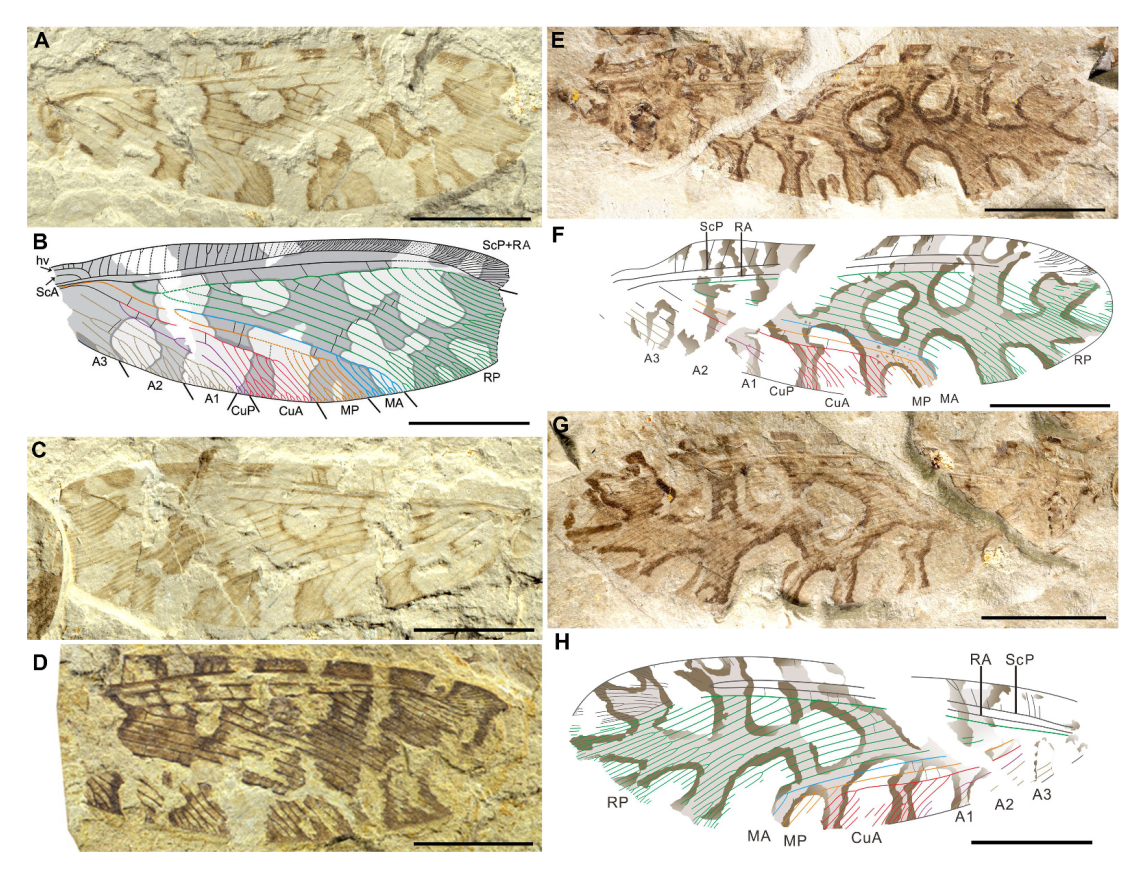 Photographs and drawings of Lichenipolystoechotes wings.