Platecarpus tympaniticus
Late Cretaceous (~84–81 million years ago)
Kansas, USA
Niobrara Formation
Coloration Data
Well-preserved melanosomes were identified within the ocular region of specimen LACM 128319. While melanosomes do not reveal the external color of the iris or sclera, they demonstrate the presence of a pigmented retinal epithelium, typical of diurnal or crepuscular vertebrates. Furthermore, skin impressions associated with the third cervical vertebra and the head of the left rib of the sixth cervical vertebra display macroscopic color markings in the form of bands and heterogeneous scale coloration. However, the authors caution that these patterns could reflect either original in-life pigment distribution or differential taphonomic preservation.
Scanning electron microscopy (SEM) and macroscopic visual examination of preserved scales.
Publications
-
Arindam Roy, Michael Pittman, Evan T. Saitta, Thomas G. Kaye, Xing Xu (2020)
An overview article on the paleo‑coloration of amniotes. -
Johan Lindgren, Michael W. Caldwell, Takuya Konishi, Luis M. Chiappe (2010)
An article describing a specimen of the mosasaur Platecarpus (LACM 128319). -
Jakob Vinther (2015)
An overview of methods for reconstructing paleo‑coloration.
Documents and files
-
Roy_et_al_2020.pdf (PDF)
Review article on amniote paleocolor in Biological Reviews of the Cambridge Philosophical Society. -
Lindgren_et_al_2010.pdf (PDF)
Article describing the study of specimen LACM 128319. -
Vinther_2015.pdf (PDF)
Review article on fossil color reconstruction.
Reconstructions
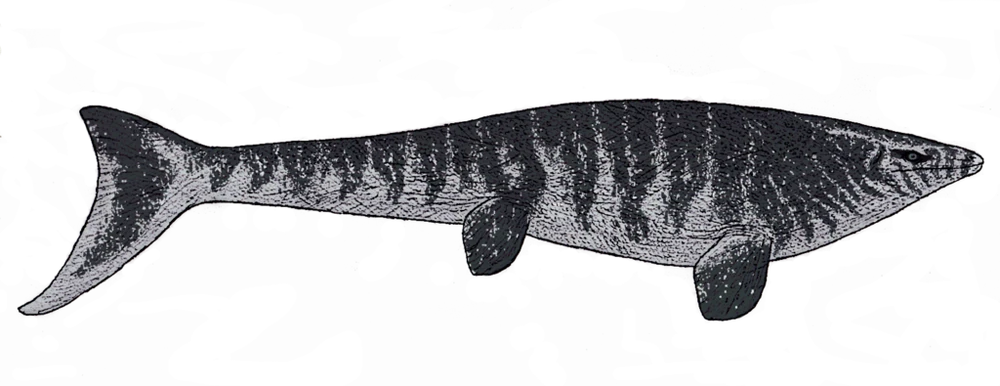 Artist's impression of Platecarpus.
Fossils
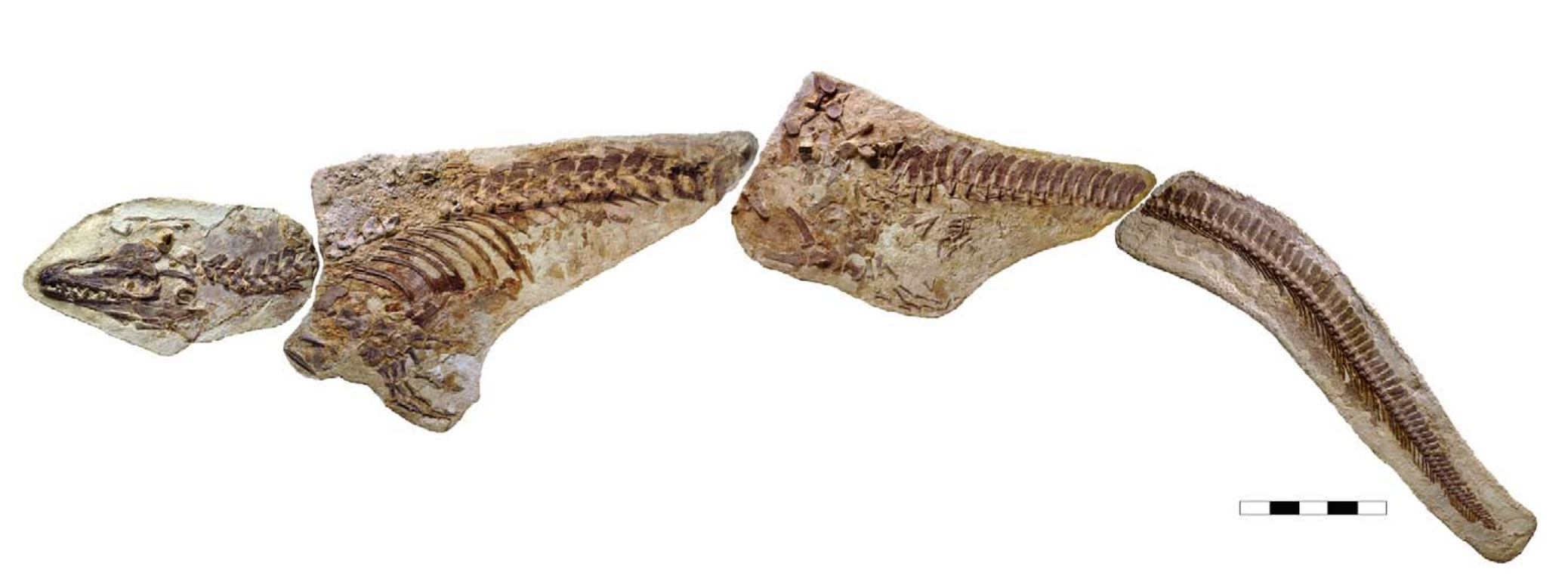 Photo of specimen LACM 128319.
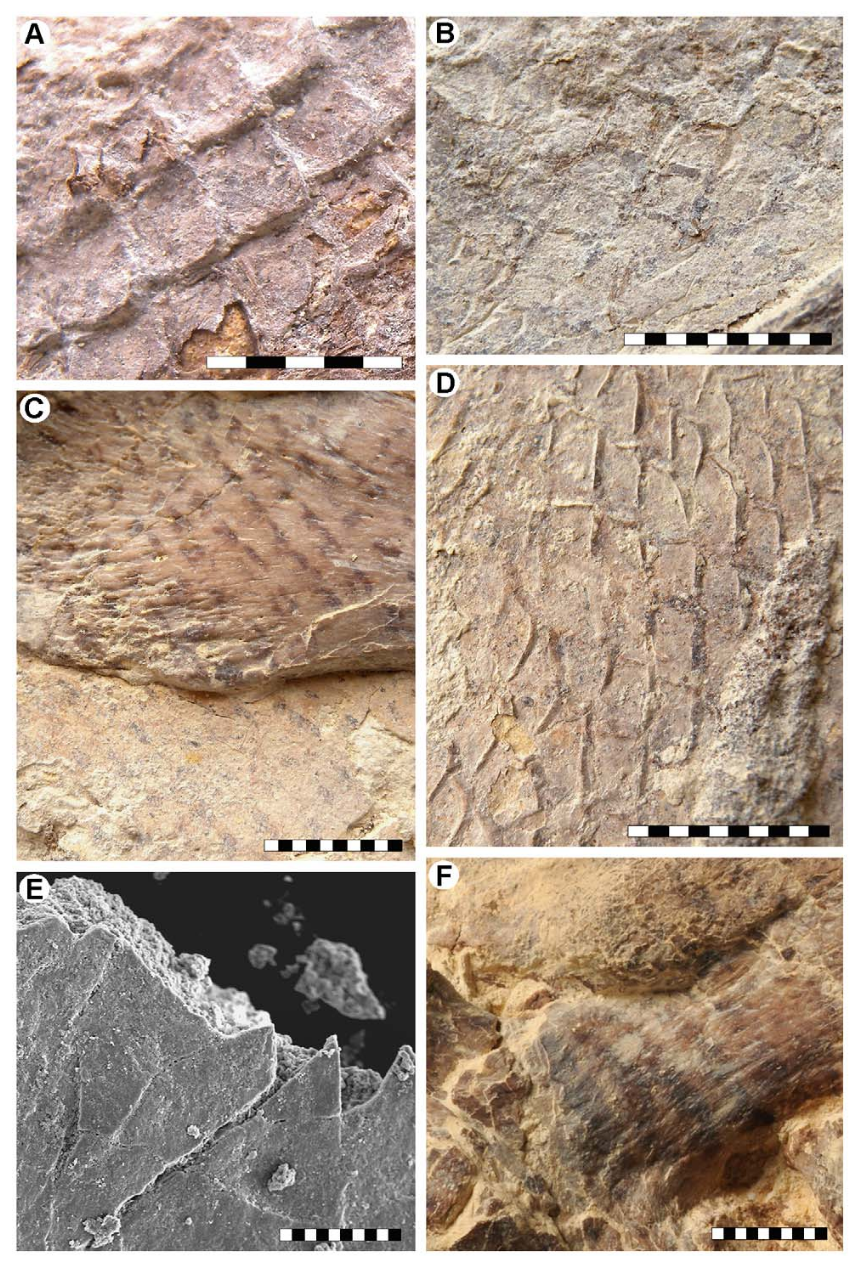 Scales of Platecarpus tympaniticus. Putative traces of life coloration are shown in figures C and F.
Size comparison
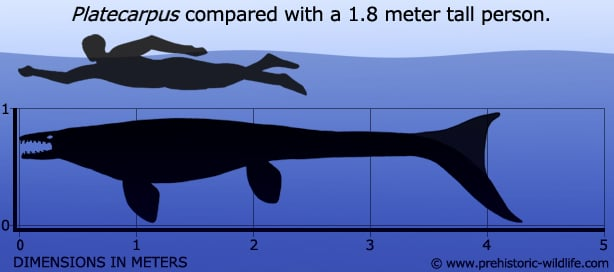 Size of Platecarpus.