Psittacosaurus sp.
Early Cretaceous (~125 million years ago)
Liaoning Province, China
Yixian Formation, Jehol Biota
Coloration Data
Investigations of specimen SMF R 4970 made it possible to reconstruct the animal's entire body coloration, with the exception of a small portion of the back and the tail bristles. The overall tone was brownish or reddish-brown. Countershading was clearly present: the dorsum (back) was dark, while the venter (belly) was light. Heavy facial pigmentation formed a dark mask around the beak. The fore- and hindlimbs featured dark spots along with contrasting stripes on their inner surfaces, and the cloacal region beneath the tail was marked by a prominent dark patch. The authors discuss that reptiles possess chromatophores capable of producing structural colors (such as green and blue), but these do not survive in the fossil record. While Psittacosaurus could theoretically have exhibited such colors, there is no physical evidence for them; furthermore, the observed patterns are strictly scale-bound, which is uncharacteristic of chromatophores located deeper within the dermis. The authors therefore lean toward the conclusion that chromatophores were either absent or did not alter the visible pattern. The study also argues that the dinosaur's countershading pattern directly reflects its habitat: the transition zone from dark to light is situated very low on the flanks. This form of camouflage is optimized for concealing a body under the diffuse lighting conditions of dense forest environments. Had the animal inhabited open plains exposed to direct overhead sunlight, the pale countershading would have extended much higher up the flanks.
Scanning electron microscopy (SEM) for melanosome identification; Laser-Stimulated Fluorescence (LSF / LIF) to reveal concealed pigmentation details; and 3D camouflage testing using a life-sized (1:1) sculpted model under varying lighting conditions.
Publications
-
Jakob Vinther, Robert Nicholls, Stephan Lautenschlager, Michael Pittman, Thomas G. Kaye, Emily Rayfield, Gerald Mayr, Innes C. Cuthill (2016)
A study of melanosomes and pigment patterns in Psittacosaurus. -
Arindam Roy, Michael Pittman, Evan T. Saitta, Thomas G. Kaye, Xing Xu (2020)
An overview article on the paleo‑coloration of amniotes.
Documents and files
-
Vinther_et_al_2016.pdf (PDF)
Article from Current Biology. -
Roy_et_al_2020.pdf (PDF)
Review article on amniote paleocolor in Biological Reviews of the Cambridge Philosophical Society.
Reconstructions
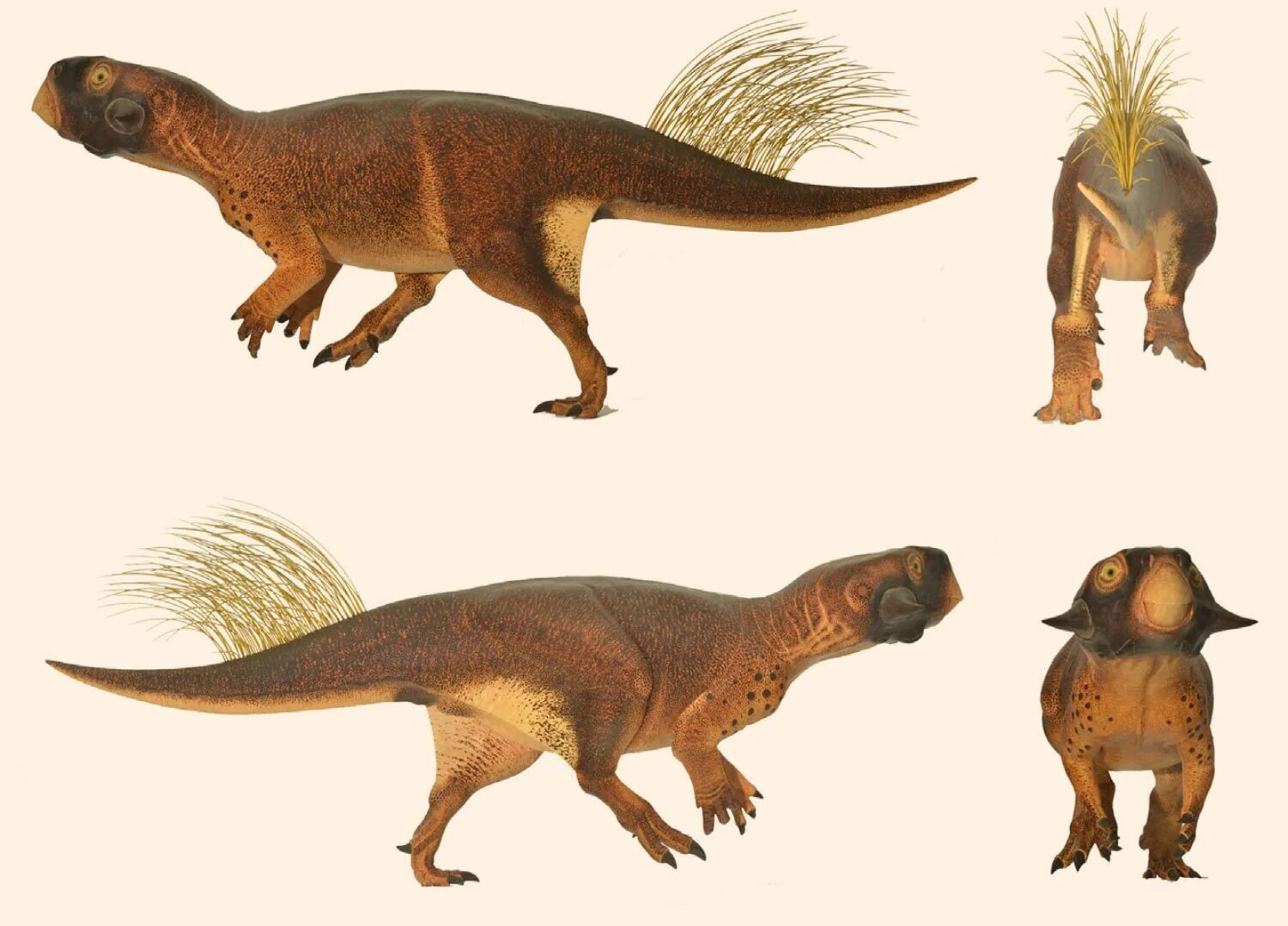 Model of Psittacosaurus based on the skin features and pigmentation pattern of specimen SMF R 4970.
Fossils
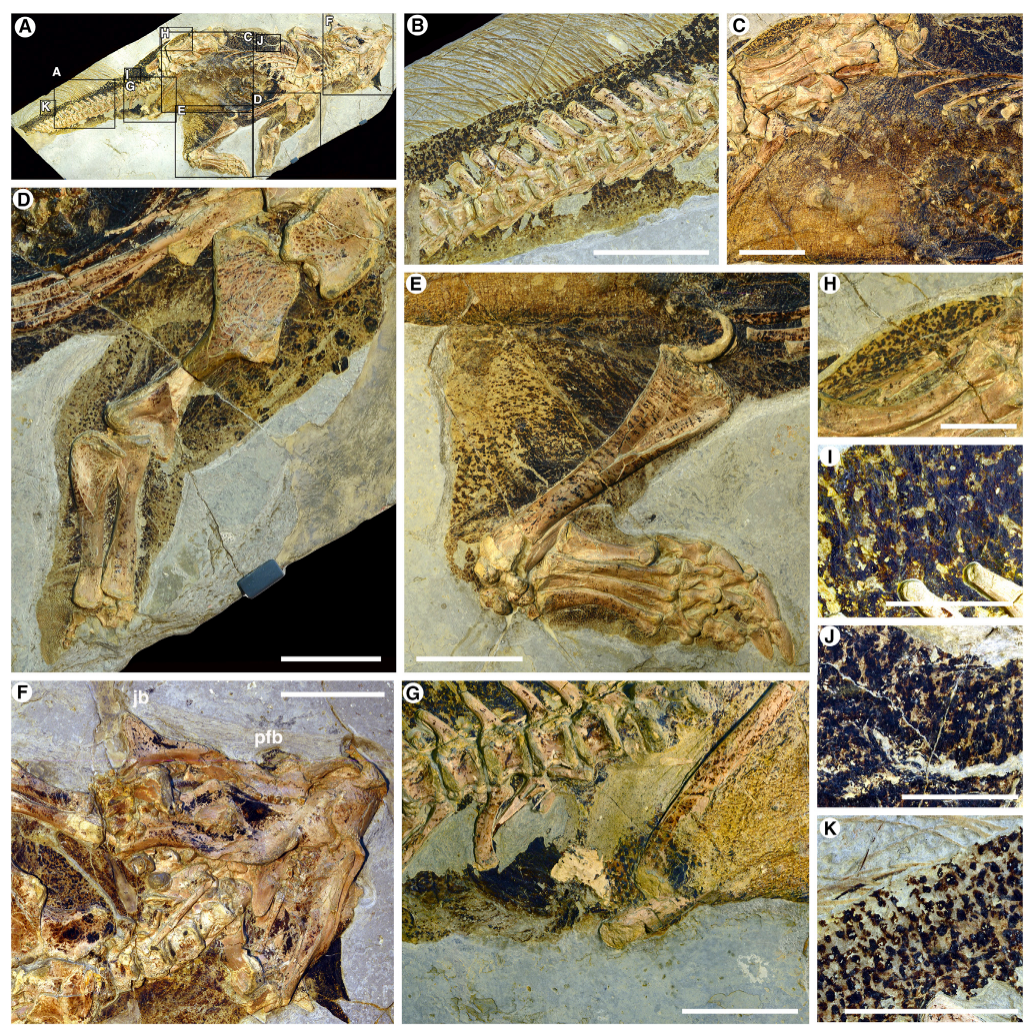 Psittacosaurus specimen (SMF R 4970) with preserved skin pigmentation and tail bristles.
Size comparison
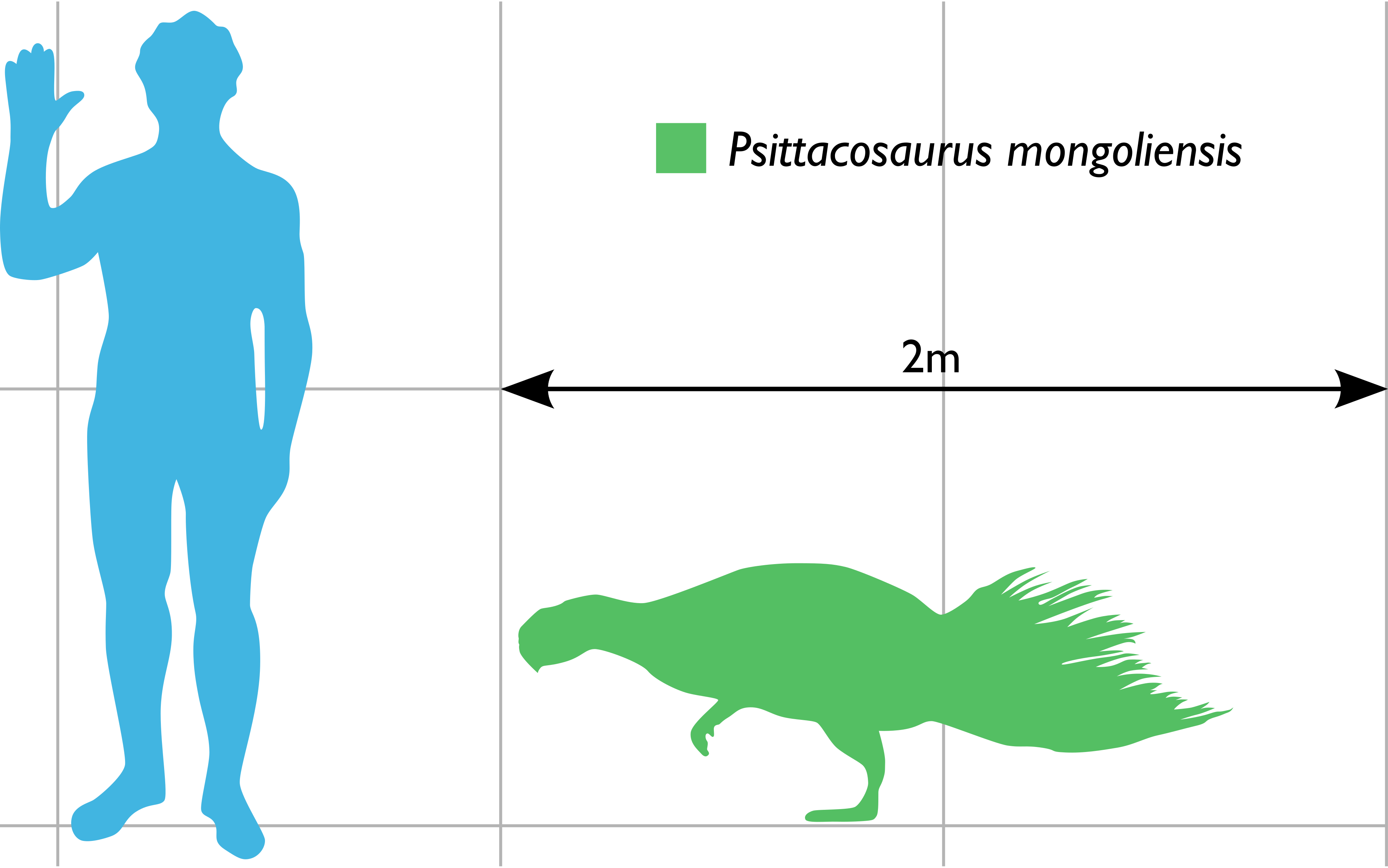 Size comparison of Psittacosaurus with a human.