Tupandactylus imperator
Early Cretaceous (~115 million years ago)
Ceará, Brazil
Crato Formation, Araripe Basin
Coloration Data
An investigation of specimen MCT.R.1884 from the Lower Cretaceous Crato Formation revealed that melanosome morphology varied according to tissue type: distinct melanosome populations were identified in the cranial crest skin, monofilaments, and branched feathers. The crest skin exhibited heterogeneous pigmentation; variations in melanosome geometry across different dermal regions indicate that skin coloration varied across the crest — potentially ranging from dark brown to lighter shades — though the exact hues remain unconfirmed. Monofilaments located along the proximal section of the occipital process contain elongated melanosomes typical of eumelanin, a trait strongly associated with black or deeply dark coloration in modern birds. In contrast, the branched integumentary structures situated along the distal portion of the occipital process contain ovoid melanosomes distinct in shape from those in the monofilaments and skin. While also deeply pigmented, they may have imparted a different shade or tonal quality compared to the monofilaments.
Scanning electron microscopy (SEM).
Publications
-
Aude Cincotta, Michaël Nicolaï, Hebert Bruno Nascimento Campos, Maria McNamara, Liliana D’Alba, Matthew D. Shawkey, Edio-Ernst Kischlat, Johan Yans, Robert Carleer, François Escuillié & Pascal Godefroit (2022)
A study of the coloration of Tupandactylus imperator. -
Arindam Roy, Michael Pittman, Evan T. Saitta, Thomas G. Kaye, Xing Xu (2020)
An overview article on the paleo‑coloration of amniotes.
Documents and files
-
Cincotta_et_al_2022.pdf (PDF)
Article by Cincotta et al., 2022 (Nature) on the coloration of Tupandactylus imperator. -
Roy_et_al_2020.pdf (PDF)
Review article on amniote paleocolor in Biological Reviews of the Cambridge Philosophical Society.
Reconstructions
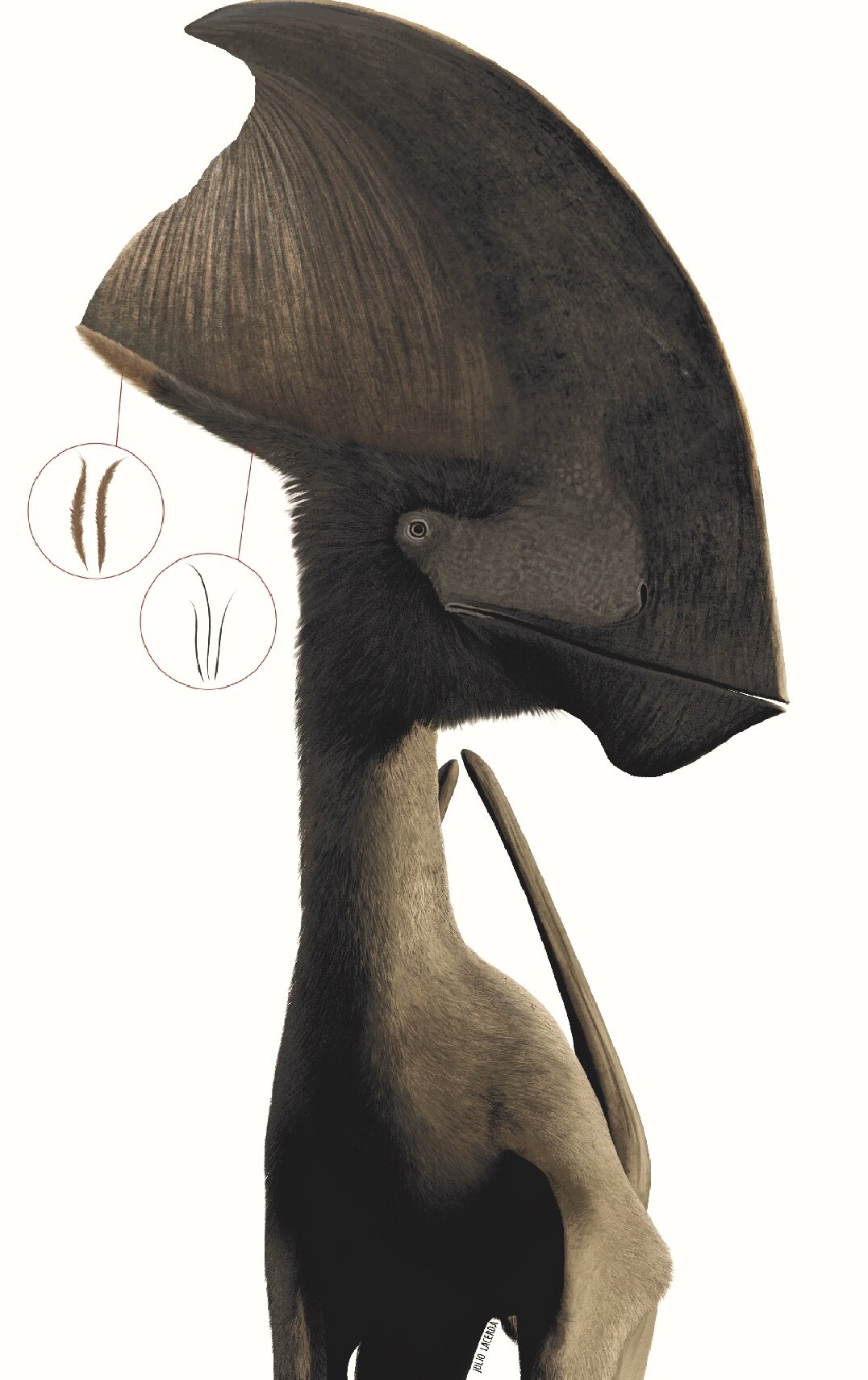 Reconstruction of the appearance of Tupandactylus imperator.
Fossils
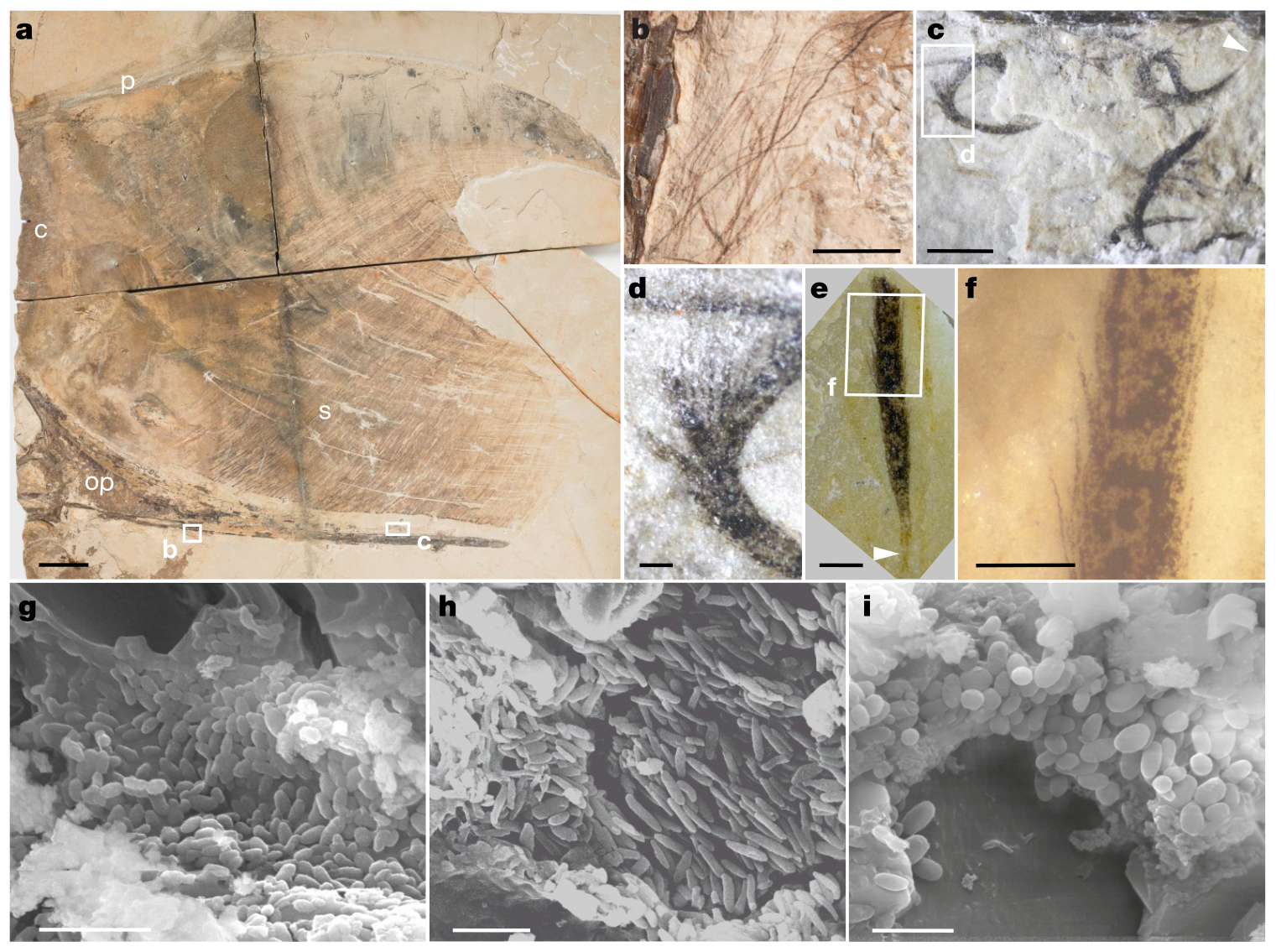 Photographs of the examined areas of specimen MCT.R.1884.
Size comparison
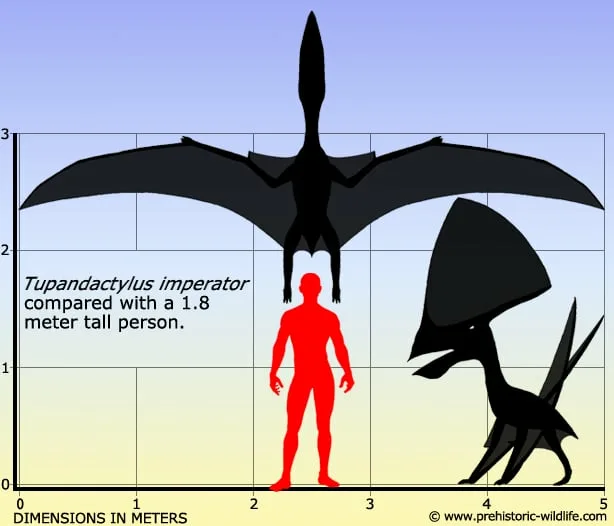 Size of Tupandactylus imperator.