Carcinosoma newlini
Late Silurian (~420 million years ago)
Indiana, USA
Kokomo Dolomite
Coloration Data
Kjellesvig-Waering (1958) described a specimen of the eurypterid Carcinosoma newlini from the Kokomo Dolomite that preserved its original in-life coloration. The impermeable, non-porous nature of the enclosing rock prevented mineralization of the cuticular chitin, leaving the original organic matter intact. Coloration was mapped across virtually the entire exoskeleton, excluding internal soft tissues and the unpreserved chelicerae. The entire dorsal surface — including the prosoma, mesosoma, and metasomal segments (tail) — was uniform light brown. The ventral surface, including the opercula and abdominal plates, exhibited countershading, being distinctly paler (described as light tan to yellowish-brown), though punctuated by scales darker than the underlying cuticle. The animal's cuticular ornamentation generated sharp visual contrasts: elongated scales across the carapace were dark brown, grading into jet-black at their apical tips. Smaller scales aligned along the anterior borders of the metasomal segments were brown, contrasting clearly against the lighter sclerites. The walking appendages were dark brown with black-tipped scales; the heavy spines arming these limbs transitioned from dark brown bases to sharp black tips. The proximal podomeres (segments nearest the body) were light brown with darker scales, whereas the gnathobasic masticatory teeth on the coxae were completely black. The main shaft of the swimming paddle was brown, while the flattened paddle blade was fringed with elongated scales transitioning to black; the terminal spines of the paddle and the entire curved telson (tail spine) were solid black.
Direct observation of exceptionally preserved, non-mineralized organic cuticle.
Publications
-
Erik N. Kjellesvig-Waering (1958)
A publication describing the life coloration of Carcinosoma newlini.
Reconstructions
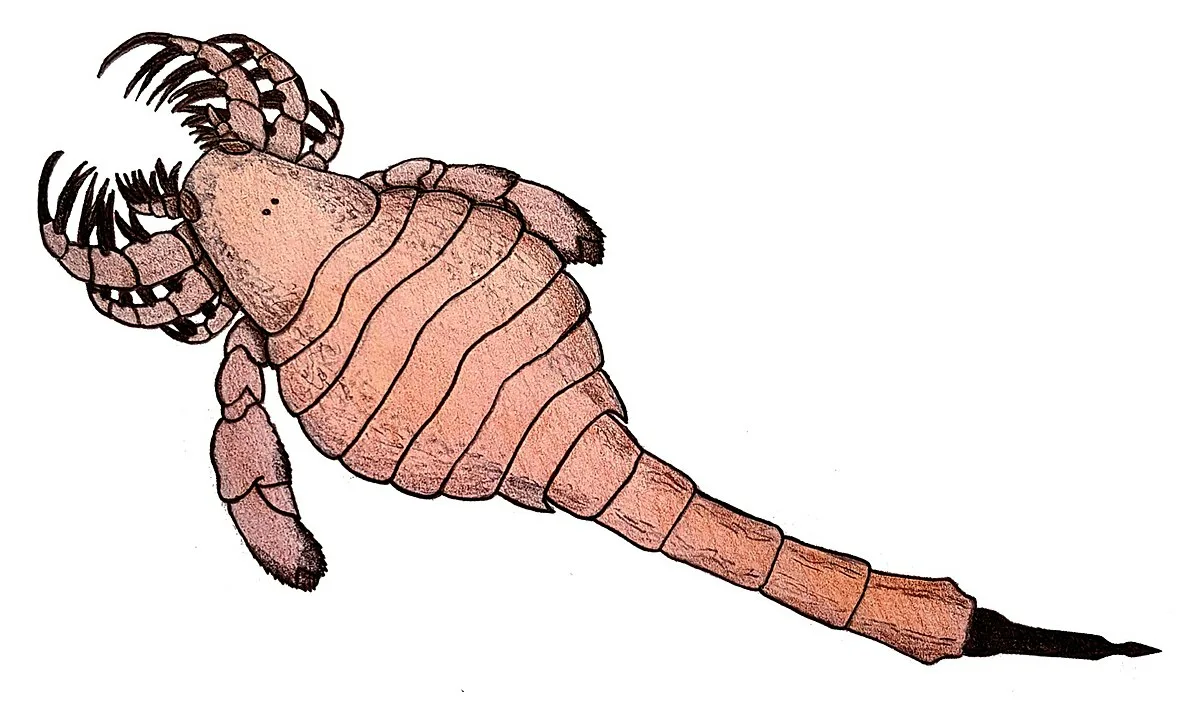 Artistic reconstruction of Carcinosoma newlini.
Fossils
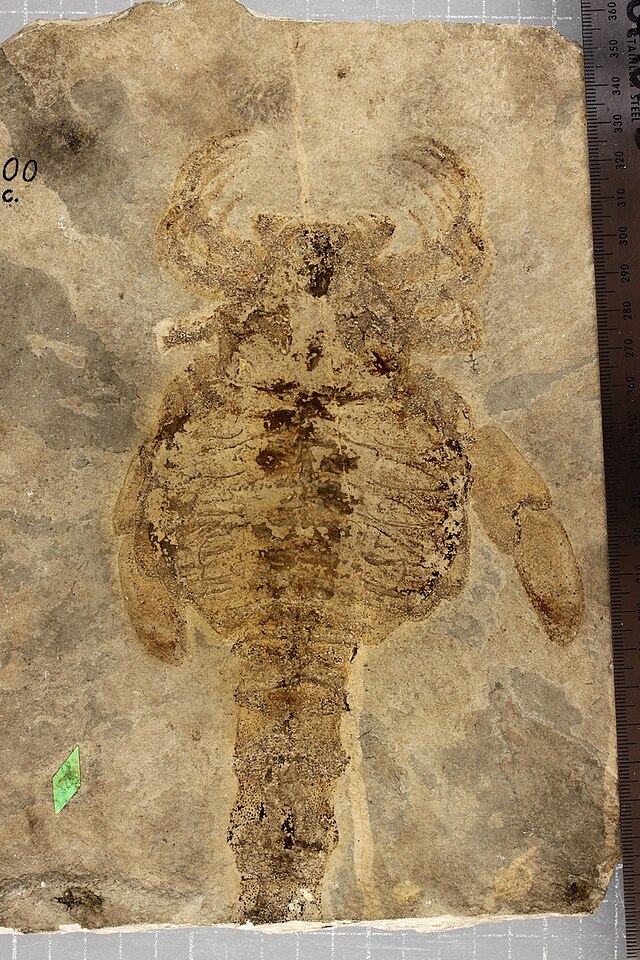 Fossil specimen of Carcinosoma newlini.
Size comparison
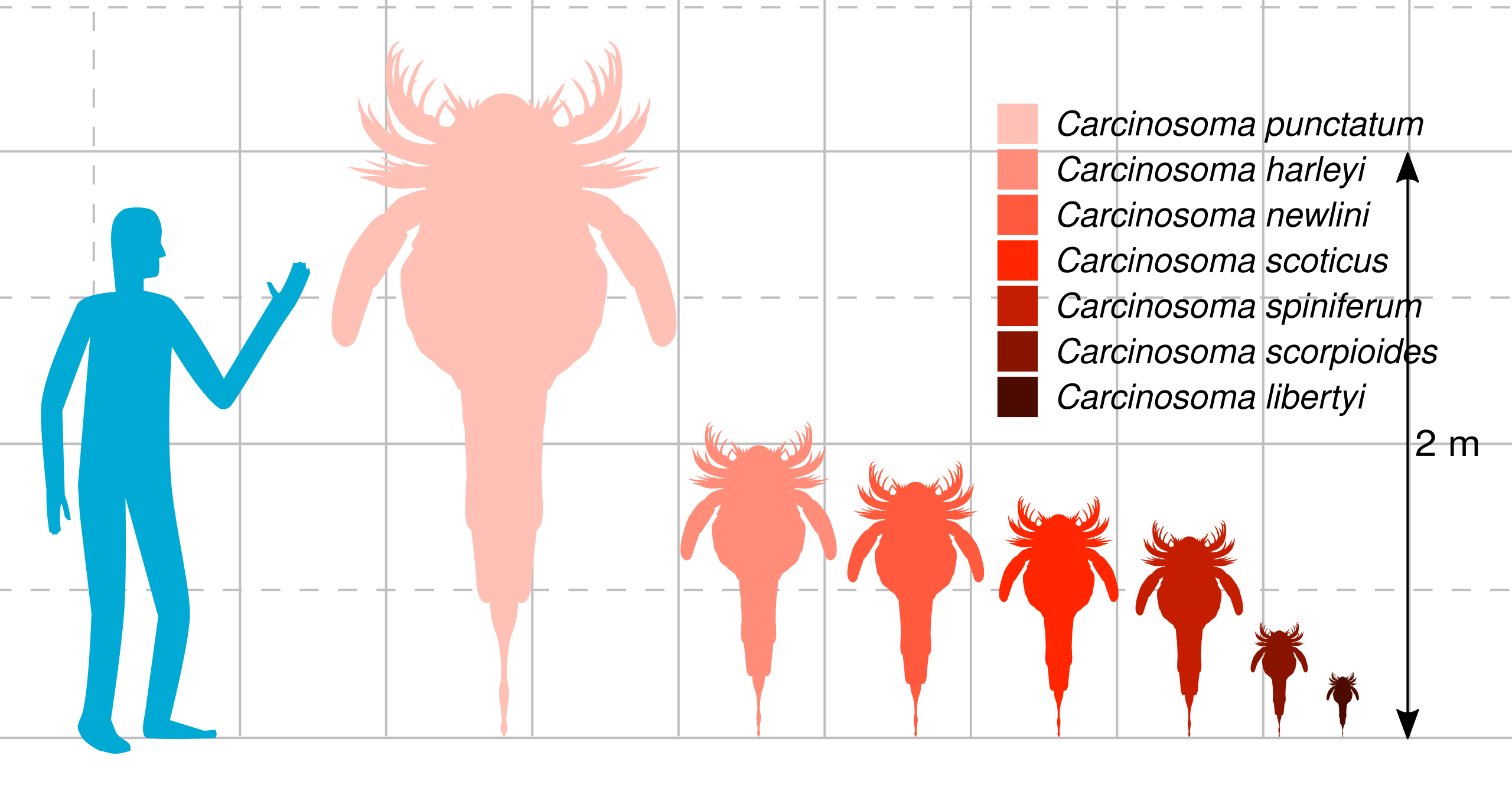 Sizes of various Carcinosoma species.