Megalograptus ohioensis
Late Ordovician (~450 million years ago)
Ohio, USA
Waynesville Formation
Coloration Data
In their article, Caster & Kjellesvig-Waering (1964) described the in-life coloration of the eurypterid Megalograptus ohioensis. The organic cuticle of several specimens was preserved unmineralized, allowing direct observation of original pigment patterns across the entire exoskeleton. The chitin was preserved in three dimensions without significant flattening, retaining fine topographic details of scales and setae, and remained sufficiently flexible to be peeled directly from the rock matrix. The ground color of the chitinous exoskeleton was dark brown, the articulations were light brown, and all cuticular ornamentations — including scales, setae, spines, and gnathobasic teeth — were deep black. The authors also noted several related species of the same genus from various Upper Ordovician horizons in Ohio and neighboring states; where preserved, their coloration displayed an identical pattern of black scales against a dark-brown ground.
Direct observation of exceptionally preserved, non-mineralized organic cuticle.
Publications
-
Caster & Kjellesvig-Waering (1964)
A publication describing the life coloration of Megalograptus ohioensis and related species.
Reconstructions
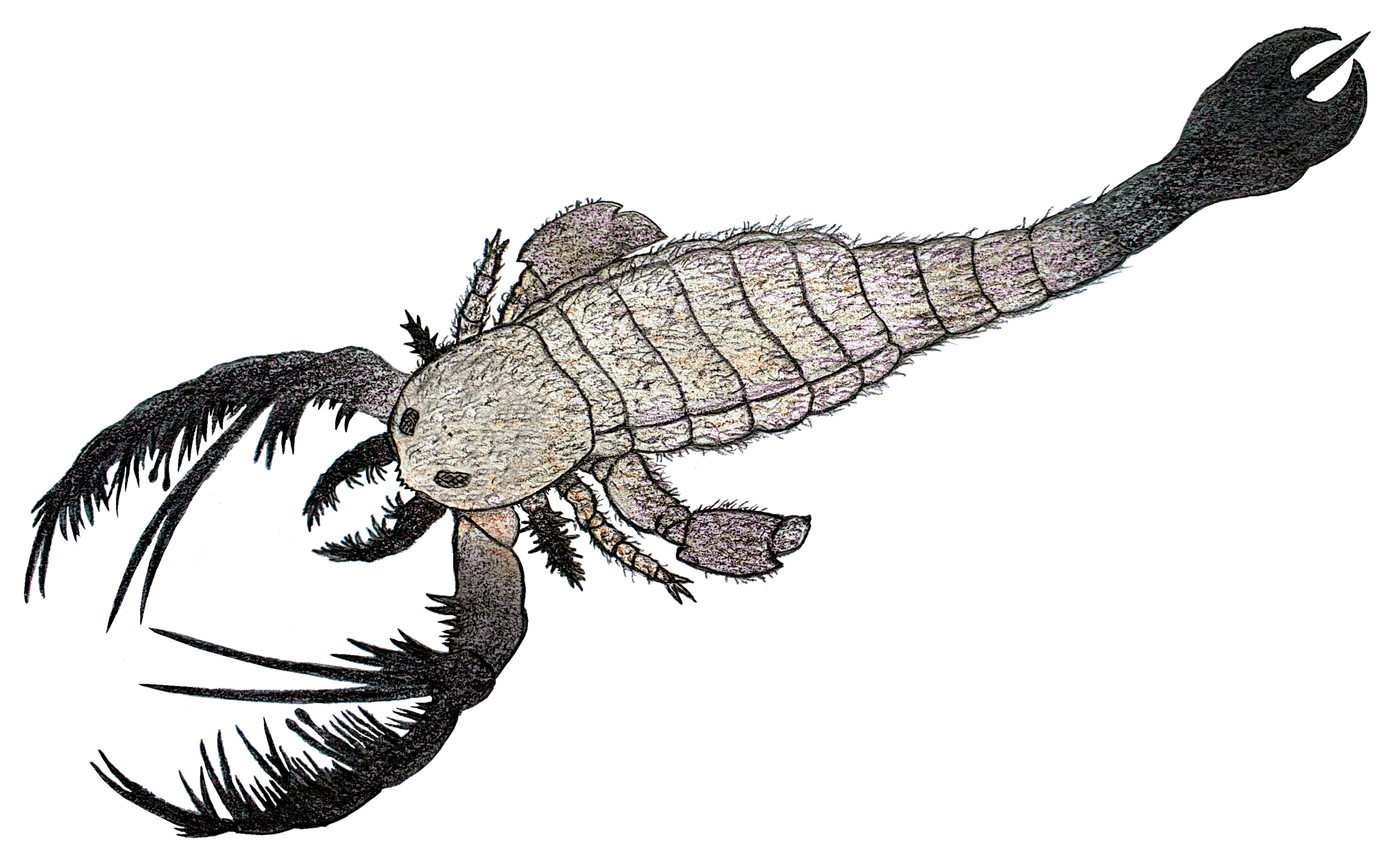 Life coloration of Megalograptus.
Fossils
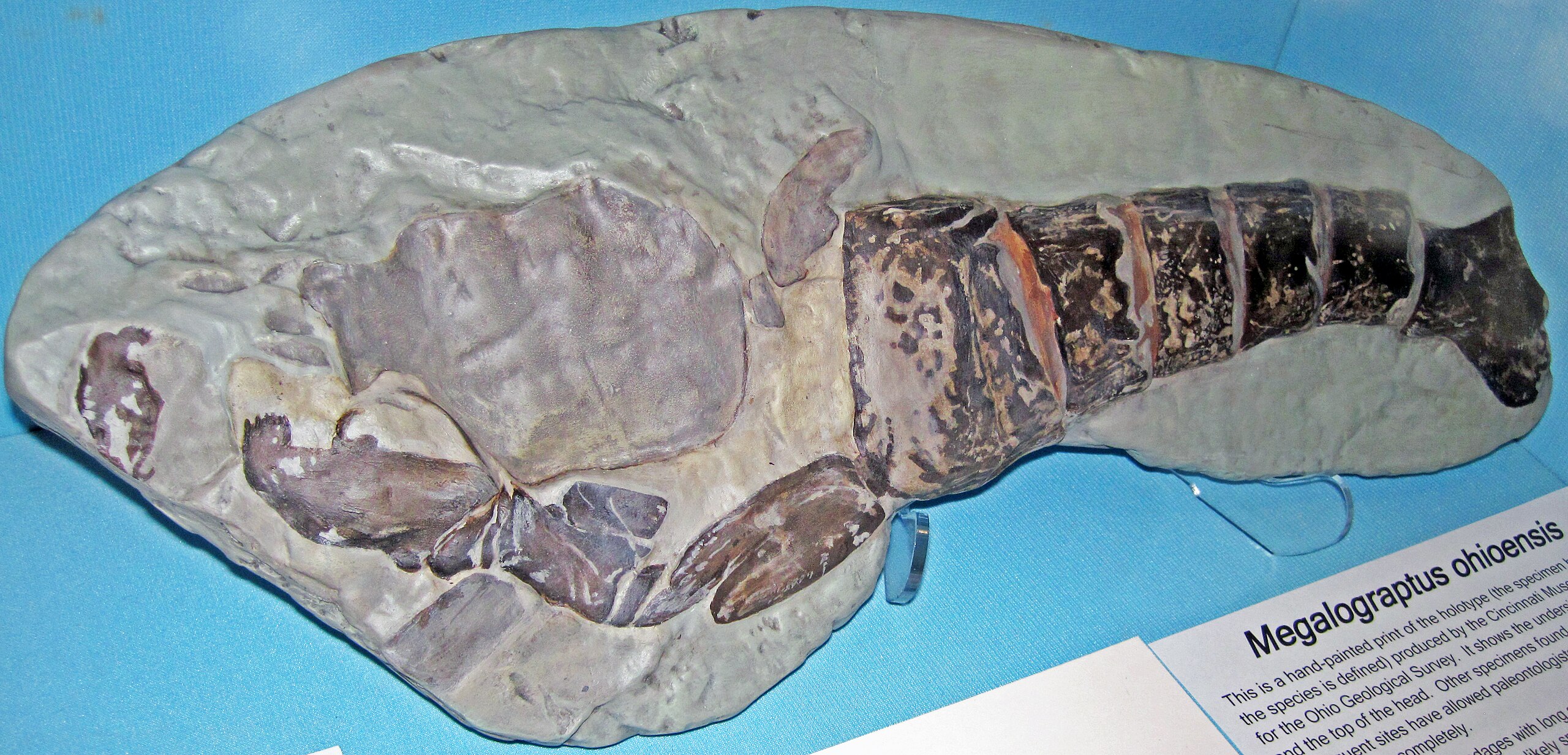 One of the specimens of Megalograptus ohioensis.
Size comparison
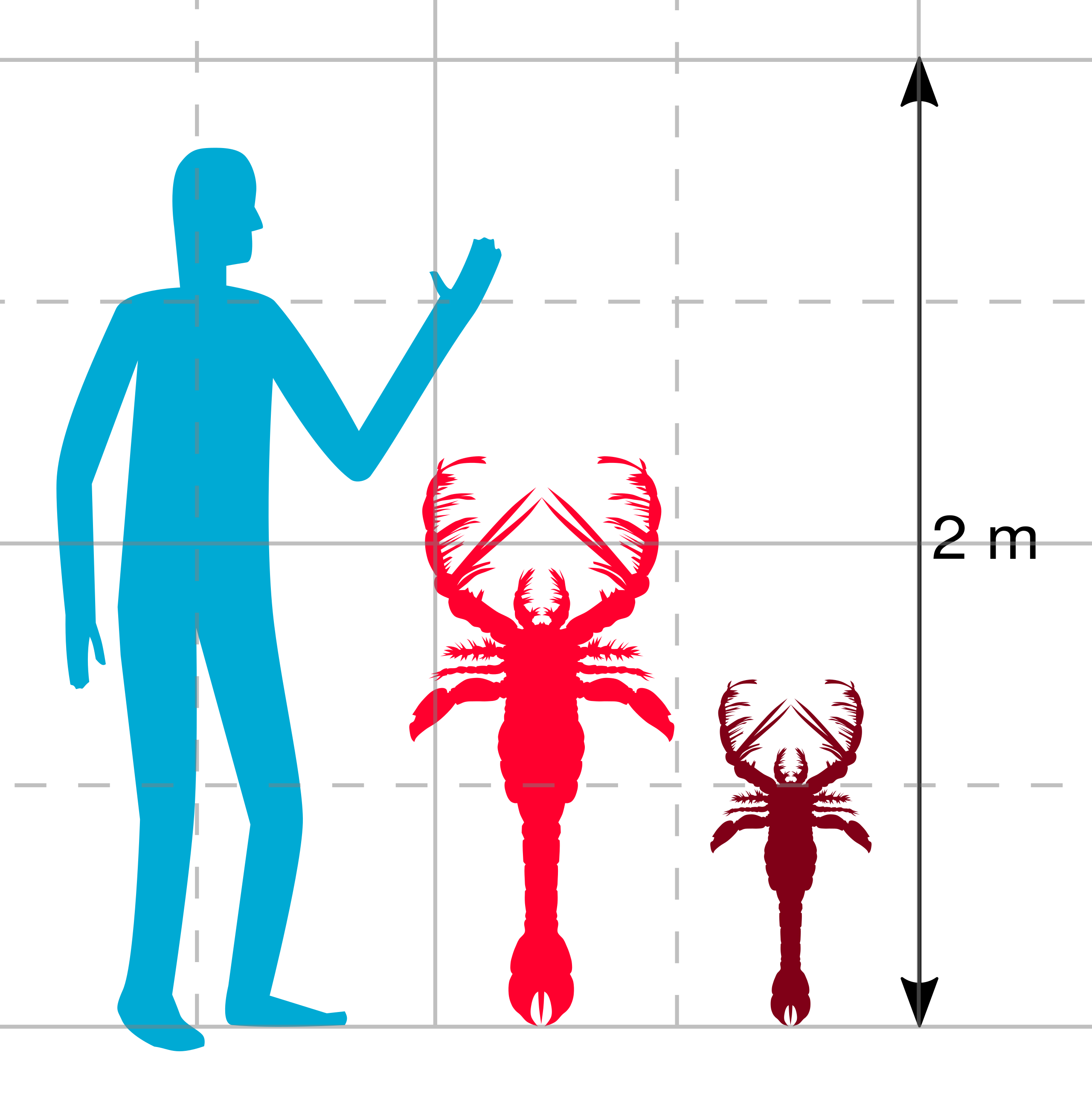 Sizes of Megalograptus williamsae (left) and Megalograptus ohioensis (right).